Chemical Engineering
December 25th, 2011The field of engineering technology which comprises of collection of raw materials from natural resources and converting them into useful finished products via a systematic scientific method is known as chemical engineering.
Any venture of science may that be in laboratory or in the industry has to start and end with materials and chemicals and throughout the entire process from feed to the final product from chemical reactions to the machines involved are all designed in chemical engineering.
This design of operations has been successfully put together by combining the knowhow of physical sciences like physics and chemistry and the life sciences such as biochemistry and microbiology.
In the industry at each process control right from the input of the feed, the flow of reactions to the final refining of materials, chemical engineering is required everywhere. Clearly if one carefully studies the processes, there will be no doubt that chemical engineering has emerged to be the skeleton of scientific and industrial technology.
Chemical Engineering and the chemical industry
A chemical plant comprises of industrial scale production of finished goods, as well as reusing and recycling of used products from the market, any variety of operations may be conducted the unit operations used in the process is made by chemical engineers using the knowledge of chemical engineering. In the plant everything from the very building of the bioreactors, storage units, processing columns to the final refining and packaging operations, all assets are built on the concept of chemical engineering.
The chemical industry is spread over a wide area of fields, petrochemical plants, petroleum refining plants, alcohol production plants, mineral processing industry, pharmaceuticals etc. because all of these sectors use the knowledge of chemistry along with technology to build the plants and execute the operations.
The chemical engineering department has to take special care when dealing with industries that are sensitive such as the pharmaceutical industry because its finished products, the medicines are consumed by living beings. Any blunder in these operations may lead to fatal conditions.
So the chemical engineering department is very cautious about the designing, construction, installation and supervision of the operations of the plants and equipments in these kinds of sectors. In short, chemical engineering is the structural and the functional unit of the chemical industry.
Problems ahead in Chemical Engineering
Ever increasing demand of better products throughout the world is seeing industrial expansion of global standards. Nature being a limited source, there is a need to design synthetic replacements for those natural raw materials whose supply chain is diminishing.
Chemical engineering aims to solve these problems by designing efficient ways to use materials.
Magnets
November 2nd, 2011Introduction to Magnets:
A magnet is a material that attracts other ferromagnetic substances towards itself due to its property of generating a magnetic field around it. This magnetic field though invisible has the power to attract another ferromagnetic object and another magnet if similar pole is approached. Only ferromagnetic materials are attracted and can be magnetized into new magnets.
Ferromagnetic materials can be divided into magnetically “soft” and “hard” materials. Examples of soft ones are annealed iron which can be magnetized very easily but tend to lose their magnetism early. On the other hand hard ferromagnetic materials such as alnico and ferrite when magnetized tend to retain their magnetism for a long time because of their alignment of their myocrystalline structure.
An electromagnet is made when current is passed through a coil of wire wrapped around a ferromagnetic material, but stops being a magnet when the current stops.
Physical properties of Magnets:
Every magnet has a magnetic moment. A magnetic moment or sometimes known as the magnetic dipole moment is a vector characterizing the overall properties of a magnet. In case of a common bar magnet the direction of its magnetic dipole moment point from its south pole to its north pole. The overall magnetic behavior varies widely according to the structure of the material particularly the magnet’s electronic configuration. Depending on the behaviors observed three different materials are seen.
Ferromagnetic materials which are strongly attracted to a magnet and the only type of materials that have the capacity to retain their magnetism for a long amount of time, for example lodestone. Paramagnetic materials are those whish are weakly attracted to a magnet, example platinum and aluminum. Diamagnetic materials on the other hand are repelled by both poles. Unlike the above two, they are even more weakly attracted by a magnet. For example, carbon, copper, plastic etc.
Uses and Safety with Magnets:
Computer monitors and televisions using cathode ray tubes employ electromagnets to form their displays. Speakers and microphones also use permanent magnets and a current carrying coil for converting the electrical energy in the wires into mechanical energy that creates the sound. Electric motors use a permanent magnet together with an electromagnet to convert electrical to mechanical energy mush like the speakers.
In medicine, magnetic resonance imaging is used to examine patient’s organs from outside. In the industry Electromagnetic separators are used to extract any metals from a mixture of organic and inorganic wastes.
Magnetism is involved in our day to day lives and is a wonderful phenomenon that benefits mankind in numerous ways.
Bitumastic
October 16th, 2011What is Bitumastic:
Bitumastic is basically made from the modified polymer called bitumen. It is mixed with a hydrocarbon solvent such that it can be applied on various types of coatings on various kinds of metal building materials, brickwork and asphalt. It can also be used for adhesive and protection on the concretes.
Bitumastic can be applied with the help of a gun, spatula or trowel. It is basically used only when the materials are cleaned from below the can. It can be used on varied range of purposes. They are basically used to seal the roofs and also its gaps. The chemical should be used only when the surface is cleared off all kinds of substances and it is free of all kinds of dusts.
Before applying a newly coat of Bitumastic, the oil on the surface should be dried. It should be applied in the adjoining parts of the building before the application of any primer or any sealant so as to protect the walls. If the surface is dirty and is very hard to eliminate the dirt, bitumen primer can be added.
What are the properties of Bitumastic?
Bitumastic are very advantageous in many ways. They have a very high tensile strength and elongation property. Due to its expansion and contraction, it can be used on varied ranges of surfaces.
Moreover, it has very high adhesive characteristic and a tough and sturdy bond. It is very stable even at a very high temperature. It is one of the components which can resists oxidation and thus it does not require any kind of mixing with other products.
It also known for its flexibility and durability and hence it can lasts longer. Bitumastic is very economic and hence used in many different fields.
Applications of Bitumastic
Bitumastic can be used in many applications since it is pretty economical. It is preferably appropriate for sealing and also to fill gaps and different kinds of joints on the roofs. It can also point flat chases which are used in waterproofing membranes. Due to its flexibility, Bitumastic can also be used in the felts. It can also be used as a sealing around the roof for various kinds of fissures.
It can be used in the opening point amid roof flashings and brickworks. It is also used to seal cracks in the asphalt and concrete roadways. It is also used to join different kinds of joints in the pipelines to avoid leakages.
The Top Five Best Selling Beers in The World
September 15th, 2011Of the many countries in the world, the ones most known for producing –and drinking beer in its many variations—include Germany, Austria, Czech Republic, Ireland, England, Australia and of course, the United States.
While beer is not solely a Western invention -the East countries except the Muslim region have their own versions, although consumption is mostly confined to their borders – you will think that a European or American beer will be the best selling beer in the world.
If you do, you’ve got another think coming: the number one largest selling beer today is “Snow”, in China.
Brewed by China Resources Snow Breweries since 1994 in Liaoning Province, Snow sold 5.12 billion liters in 2008, and 5.1 billion in the first nine months of 2009. With an estimated annual growth trend of about 20%, Snow is expected to have overhaul ed by today the largest-selling beer in terms of volume consumed – Bud Light.
Snow’s export future is considered still dim, however, what with the country’s extremely huge domestic market potential of 1.3 billion people and the beer’s ‘unimpressive and very drinkable’ character, according to Beeradvocate, the beer magazine monthly.
CR Snow Breweries is a joint venture between China Resources and SABMiller of the United Kingdom.
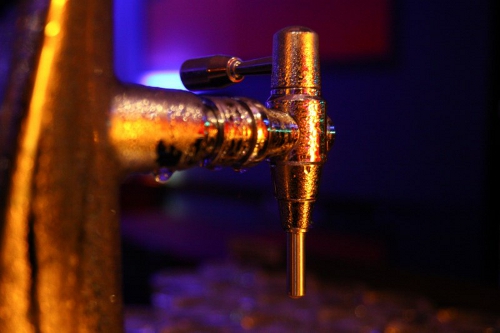
In essence, the top five largest-selling beers in the world in hectoliters for the year 2008, are as follows according to Plato Logic:
Snow beer. About 61.0 million. Sales is believed to be almost all-domestic.
Bud Light, 55.6 million hectoliters (hl) or 47.38 million barrels. Up from about 39 million barrels in 2005. Bud Light is America’s best selling beer since 2001, with about 16% total market share, and only sold internationally in appreciative quantities in Sweden, Ireland, Colombia, Canada and Mexico.
Budweiser, 43.4 million hl, or 36.98 million barrels. It ranks second to its lighter brother in the US along with Miller Lite, Corona Extra and Coors Lite.
Skol (Brazil), 35.4 million hl; 30.16 million barrels. Few people expect Brazil to be a beer-drinking country, but its 200 million population consumes millions of barrels annually. Skol dominates the local market, Brahma sharing 20% and Antarctica 14%.
Corona, 32.7 million hl; 27.86 million barrels. This is Mexico’s top beer, with Tecate and Dos Equis second and third. Tecate Light touts itself, however, as the local best selling light beer. Corona is also sold in the United States and 150 other countries.
Heineken, 29.1million hl; 24.79 million barrels. This Dutch beer that began in 1873 is often carried alone by many beerhalls in the country, pumped from trucks insted of unloaded from heavy barrels. The Pilsner is also sold abroad, often competing favorably agains t local brands, and Heineken is also brewed in 39 countries aside from the Netherlands.
There are naturally other beer brands that sell large in their own turf such Labatt Blue in Canada, Guinness in Ireland and UK, Carlsberg in Denmark and Stella Artois in Belgium to name some, and many drinkers would swear by them as the ‘best beer’.
In a way, they are right: It is a matter of taste, really.
Hilarious (and Corny) Pick-up Lines
September 2nd, 2011There’s a saying, if you can make someone laugh, you can make them do almost anything. Have you got what it takes to put a smile on someone’s dial? Hilarious pick up lines…
1) Oh sorry, were you just speaking to me? [No] okay, can you start now?
2) Do you know how much an average polar bear would weigh? [No, How much?] They usually weigh enough to break the ice…Great to meet you, I’m (introduce yourself).
3) Hi there, the name’s Doug. Which spells ‘god’ backwards with you(u) packaged up inside it. (she won’t mind if your name isn’t really Doug, so long as she gets a laugh)
4) Hi, my friends dared me to come talk to you, they said I wouldn’t be able to start a conversation with you. What if I bought you a few drinks with their money?
5) “I reckon I could kiss you on the mouth and not even touch you.” Then plant one on her and say “oh well, I lost the bet”
6) Tell her you’re physic and you’d like to read her fortune. Take her hand then write down your phone number.
7) I was extremely taken back by your beautiful face, so much so that I walked straight into that wall. For insurance requirements, I’ll need your phone number?
8) So I don’t look silly in front of my mates, can I at least get a fake phone number?
9) Do I look good enough yet? Or shall I buy you some more drinks just to make sure?
10) The funny thing is, the more I drink, the better looking you get!
11) Here’s $50, please keep drinking until I look good enough.
12) I don’t care if the sun never comes up again, your eyes light up my world.
13) I’m just not sure what’s more stunning, the blue sky, the beautiful sea, or your amazing eyes.
14) Were those pants made in space? Your ass is totally out of this world!
15) (Point towards her ass) Excuse me, is this seat available?
16) Your dress would look fantastic in a crumpled heap on the floor of my bedroom in the morning.
17) I bet your Dad is a mechanic? How else would you get such a fine tuned body?
18) Hi, would you like to dance [No] I’m sorry, I don’t think you heard me correctly…u look fat in those pants!!
19) You look so hot, no wonder global warming is getting bad.
20) Are you a believer of love at first sight? Maybe I should turn around and walk past you again?
21) You’ll never guess? You have the same eye color as my Ferrari!
22) Hi, my friend over there would like to know if you think I’m attractive?
There you have a few pickup lines to add to your collection. I you’re a single guy or girl and looking to up your dating life, a well-executed ice-breaker is all you’ll need to improve your dating and social life: Sometimes, it’s the simple things that work best!
Project Management Organizational Structures Paper
July 16th, 2011Different organization are ran different ways. Each one finds ways that are suitable to their different needs. An organizations structure can help or hurt their ability to achieve success.

Some organizational structures can definitely impair the organization’s ability to deliver project success. So choosing the correct organization structure is imperative to the success of that particular organization.
The three primary project management organizational structures are functional, matrix, and pure project.
Every organization must compare and contrast these three organizational structures to figure out which one will best fit their organizations wants and needs. Once an organization finds its organization structure, it will help put them on the road to success.
Primary Project Management Organizational Structures
There are three primary project management organizational structures that have become the foundation for how an organization is run: functional, matrix, and pure project. Each structure has advantages, and if used correctly and in the right environment, the structure can further the completion of projects (Tait, 2010).
These structures have many disadvantages as well. An organizational structure can help or hurt project success, plus some organizational structures can impair your ability to deliver projects. A company’s organizational structure can either get in the way of, or help support the overall success of their projects.
Some organizational structures may also impede the ability to share resources and impair the workers ability to deliver projects. But these structures can still work well if the project managers understand them correctly and good communication exists. Choosing the correct organizational structure for each project is imperative for the success of that project.
Companies must compare and contrast all choices to pick the best one suited for their particular project.
Functional
The functional organization, the most common type of project management organizational structure, works best in small organizations where all the sections are geographically close together and provide a small number of goods and/or services. The organization is broken up into different structures based on specialty in the functional organization.
An advantage to the functional structure is the role of the functional manager, which means there’s only one boss (Tait, 2010). Having one boss makes it easier to manage specialists and reduces or prevents conflicts of interest. The main disadvantage is that project managers have limited authority and a limited career path in this type of structure.
Matrix
The matrix organizational form is an attempt to combine the advantages of the pure functional structure and the product organizational structure (Kerzner, 2006). This form is suited for “project-driven” companies such as construction. The power and authority used by the project manager come directly from the general manager since each project represents a potential profit, so the project manager has total responsibility and accountability for project success.
Project management is a “coordinative” function, whereas matrix management is a collaborative function division of project management (Kerzner, 2006). There are certain ground rules that exist in a matrix development that include: participants spend full time on projects, horizontal and vertical channels must exist for making commitments, quick and effective methods for conflict resolution, good communication between managers, managers have input in the planning process, horizontally and vertically oriented managers must be willing to negotiate for resources, and horizontal lines must be permitted to operate as a separate entity (except for administrative purposes).
The matrix structure can provide a rapid response to changes, conflicts, and other project needs.
Conflicts are normally minimal, but those requiring resolution are easily resolved using hierarchical referral (Kerzner, 2006). Almost all of the disadvantages of the traditional structure are eliminated due to the abundance of advantages in the matrix structure.
Pure Project
When an organization has a fewer number of projects but the projects have longer duration, a pure project organization is proposed. Each project manager is appointed and he or she is responsible to conduct all activities associated with the project, so the project manager is responsible to the program manager.
The project manager has fully authority for the execution of the project and he reports to the program manager in the parent organization (Scribd, 2011).
This means lines of communication will be shortened because the project manager directly communicates with the parent project organization members. In the pure project structure, the fast reaction time keeps activities on schedule, but technology suffers because without strong functional groups, which maintain interactive technical communication, the company’s outlook for meeting the competition may be severely hampered (Kerzner, 2006).
Conclusion
Once an organization finds its organization structure, it will help put them on the road to success. There are three primary project management organizational structures to choose from, which include: functional, matrix, and pure project. Every organizational structure has advantages as well as disadvantages, but choosing the correct structure can help implement a successful project.
This is why it is so important to compare and contrast these organizational structures and choosing the correct one to meet all your company’s needs and wants, because choosing the wrong one could end in failure of the project. The functional organization structure is the most common type of project management organizational structure. It works best in small organizations where all the sections are geographically close together and provide a small number of goods and/or services.
The matrix structure is for “project-driven” companies such as construction. It is a combination of both functional and pure projects structures and each team member has two bosses; project manager and functional manager.
An organization that has a fewer number of projects but they have a longer duration of time, that is when the pure project is used. After these project management organization structures are compared and a company figures out which structure would be the best method to manage a project team, success almost inevitable.
Reference
Kerzner, H. (2006). Project management: a systems approach to planning, scheduling, and controlling. Wiley.
Tait, R. (2010, May 10). Types of organizational structures. Retrieved from http://www.ehow.com/about_5396817_types-organization-structures.html
Scribd, Initials. (2011). Pure project organization. Retrieved from http://www.scribd.com/doc/27605941/Pure-Project-Organization